
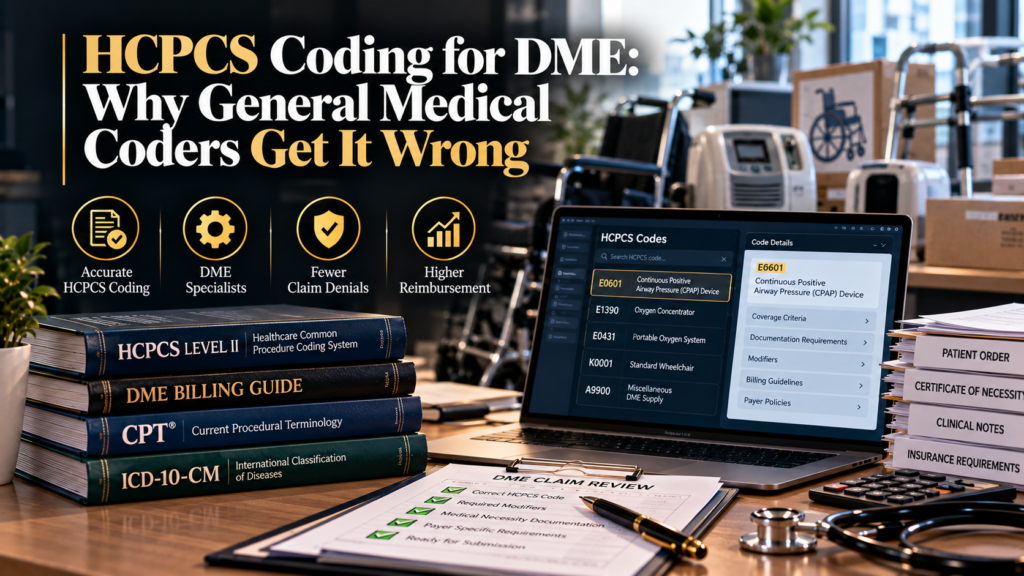
Every practice has that one category of claims that behaves differently from everything else, and for a lot of providers offering durable medical equipment, that category is DME. Regular office visit claims sail through without issue, while equipment claims seem to bounce back for reasons that never quite make sense on the surface.
The pattern usually traces back to something specific. Most general coders misunderstand what HCPCS coding is and how it differs from CPT, especially for DME and supplies, and that gap is exactly where avoidable denials start, often tied to HCPCS coding Nevada practices need to handle with real precision.
What Is HCPCS Coding, Really
HCPCS is a coding system built specifically for equipment, supplies, and services that CPT doesn’t fully cover. It’s commonly used for durable medical equipment, ambulance services, and certain medications. Treating it like just another CPT code is exactly what causes problems for practices that offer DME as part of patient care.
How HCPCS and CPT Actually Differ in Practice
CPT codes describe what a provider did during a visit. HCPCS Level II codes describe the equipment or supply itself, often down to specific brand categories or quantities, which means the documentation standard behind each code type is genuinely different.
Where General Coders Commonly Go Wrong
Outdated HCPCS Level II codes slip through more often than you’d expect. Required modifiers for DME claims get missed entirely. Medical necessity documentation doesn’t get formatted the specific way payers actually expect for equipment claims, and sometimes HCPCS gets confused with CPT altogether.
Why DME Claims Get Denied More Often
DME claims require a level of documentation and coding precision that standard visit-based billing simply doesn’t demand. A missing modifier or a slightly wrong code level can bounce an entire claim, even when the equipment was medically necessary and properly documented on the clinical side. This is exactly why understanding what is hcpcs coding matters so much for anyone handling DME specifically.
What Practices Offering DME Should Look For in a Billing Partner
Practices need a partner with real experience in HCPCS specifically, including regional payer nuances if you’re operating in this state, not just general CPT familiarity. This matters for any provider offering medical billing services in Nevada that includes durable equipment as part of patient care.
Ask directly how often their coders handle DME claims. If the answer is vague, that’s worth noting before you sign anything.
How CNC Handles HCPCS and DME Billing
CNC Medical Billing brings specialty-specific coding expertise to DME claims, with coding audits happening before submission rather than after a denial arrives. Continual training on CPT, ICD-10, and HCPCS updates keeps the whole process current, which is exactly what prevents the pattern described above.
If your DME claims have been bouncing more than they should, it’s worth having someone actually look at what’s happening.
Tired of DME claims bouncing for reasons that don’t make sense? Reach out to CNC Medical Billing and get your current claims reviewed by someone who actually knows HCPCS.
Frequently Asked Questions
What’s the difference between CPT and HCPCS codes?
Do all DME claims require prior authorization?
Not always, but many payers do require it for specific equipment categories, so checking payer requirements before billing saves real time later.
What documentation is needed to support medical necessity for equipment claims?
Payers typically want a clear clinical justification tied to the patient’s diagnosis, along with any required physician orders or supporting notes.