
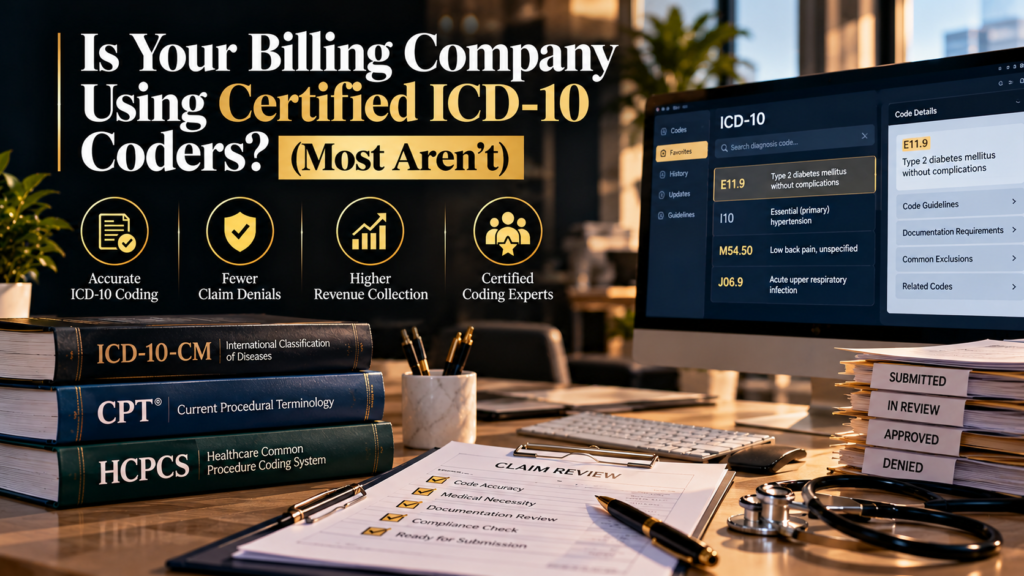
There’s a question almost nobody asks their billing company directly, and it’s a fair one. Who exactly is coding my claims, and are they actually certified to do it? A lot of vendors call themselves an icd-10 medical coding company without employing icd 10 certified coders on staff at all. Some outsource the coding entirely. Others lean on software and call that good enough.
The stakes here are genuinely real. A single wrong or outdated ICD-10 code can mean a denied claim, a compliance flag, or revenue that simply never gets recovered. If you’ve never actually asked who codes your claims, this is worth reading before your next denial shows up in the mail.
What Makes a Real ICD-10 Medical Coding Company
ICD-10 codes update regularly, and certification means a coder has been tested and keeps up through ongoing continuing education, not just a training session from three years ago. This is only half the picture, though. Clean submission and real follow-through matter just as much as the coding itself, which is what proper medical billing and coding services are supposed to deliver as a whole.
A genuine icd-10 medical coding company builds its entire process around this standard rather than treating certification as optional paperwork somebody can skip when things get busy.
The Difference Between Coding Software and a Certified Coder
Software can suggest a code based on keywords in a chart. It cannot catch missing context, documentation gaps, or medical necessity issues that only a trained human eye notices. Relying on generic software where real expertise is needed is exactly how avoidable denials keep happening, and it’s a shortcut a genuine icd-10 medical coding company simply doesn’t take.
What Continual Training Actually Looks Like in Practice
Real coder training isn’t a one-time certification exam followed by years of coasting. It means regular review of code updates, ongoing education credits, and internal audits that catch drift before it becomes a pattern of repeat denials.
Red Flags That Your Billing Company Isn’t a Real ICD-10 Medical Coding Company
Watch for vague answers whenever you ask about coder credentials directly. Watch for denial rates that stay high or keep repeating for the same reasons month after month. Watch for zero visibility into who is actually coding your claims, or coding quietly handled by an unnamed offshore team you’ve never spoken with.
If any of these sound familiar, it’s worth a direct conversation with your current billing partner, or a second opinion from someone else entirely.
Why This Matters More Than Ever in 2026
Payer scrutiny and audit risk have both increased, which means coding accuracy now affects your compliance standing just as much as your revenue. A pattern of coding errors used to just cost you money. Now it can trigger a much closer look at your entire practice.
How CNC Approaches ICD-10 Coding Differently
At CNC Medical Billing, coders stay continually trained on CPT, ICD-10, and HCPCS updates, and every claim gets audited before submission rather than after it bounces back. Upcoding and downcoding prevention is built into that process too, protecting your practice from both lost revenue and compliance exposure.
Curious whether your current claims are being coded by someone actually certified? Reach out to CNC Medical Billing and get your coding reviewed by a real specialist.
Frequently Asked Questions
What’s the difference between ICD-10 and CPT coding?
ICD-10 codes describe diagnoses, while CPT codes describe the procedures and services actually performed during a visit.
How often do ICD-10 codes get updated?
Updates typically happen annually, though mid-year revisions do occur, which is exactly why continual coder training matters.
Can incorrect coding trigger an audit?
Yes, repeated coding errors, especially patterns of upcoding or downcoding, can draw payer attention and lead to a closer review of your billing practices.